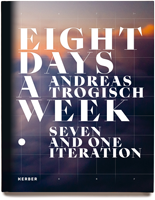
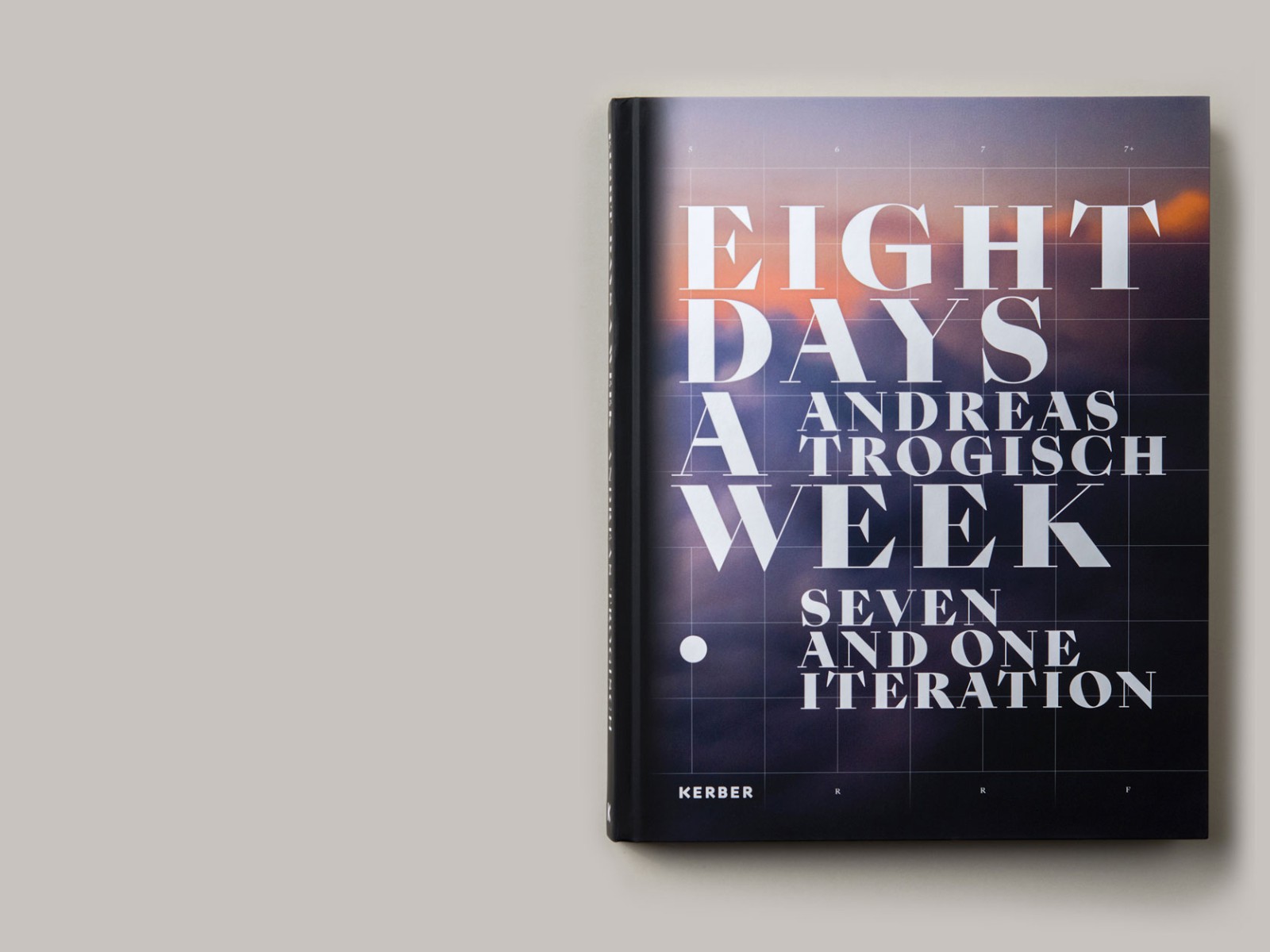
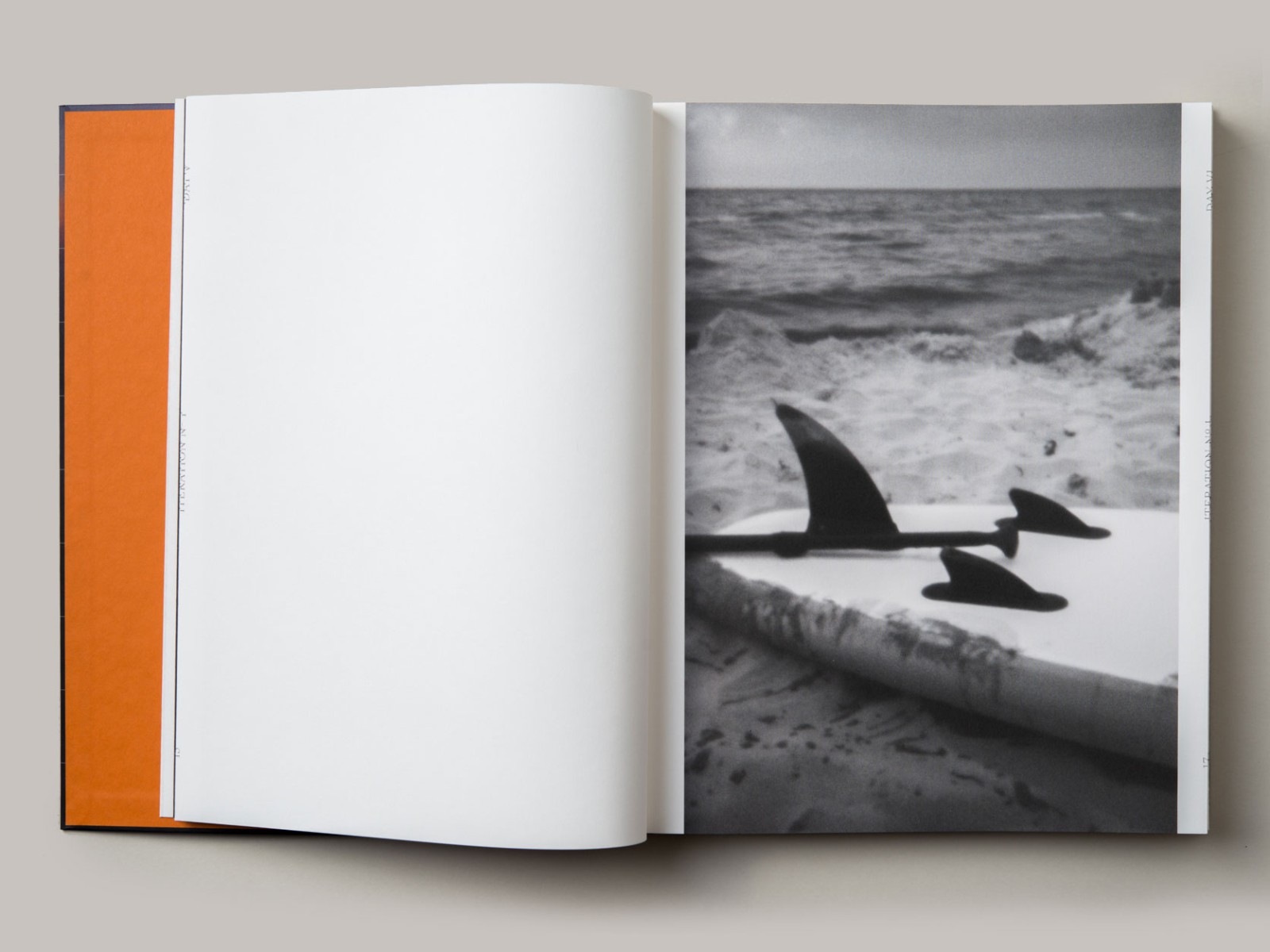
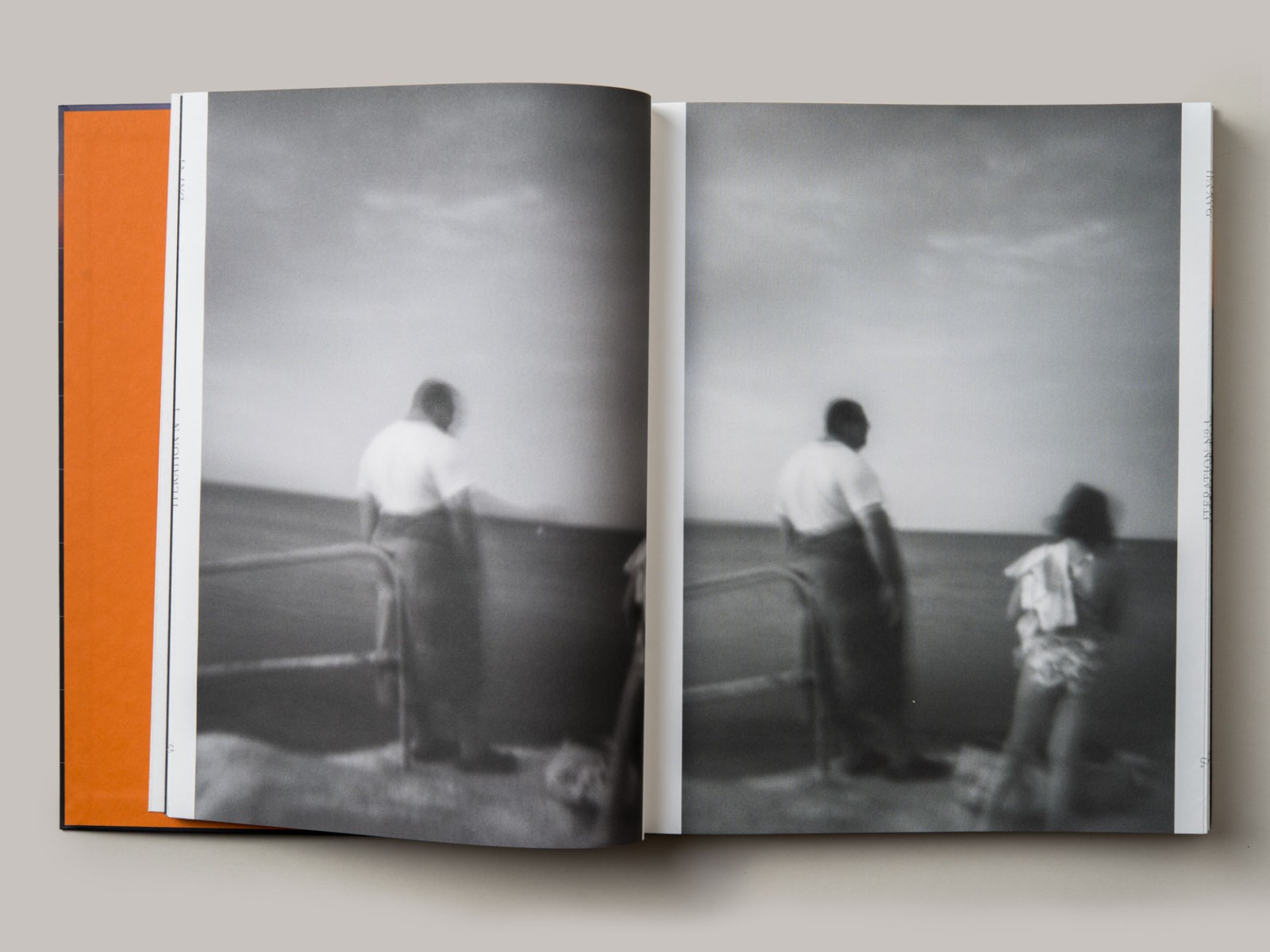
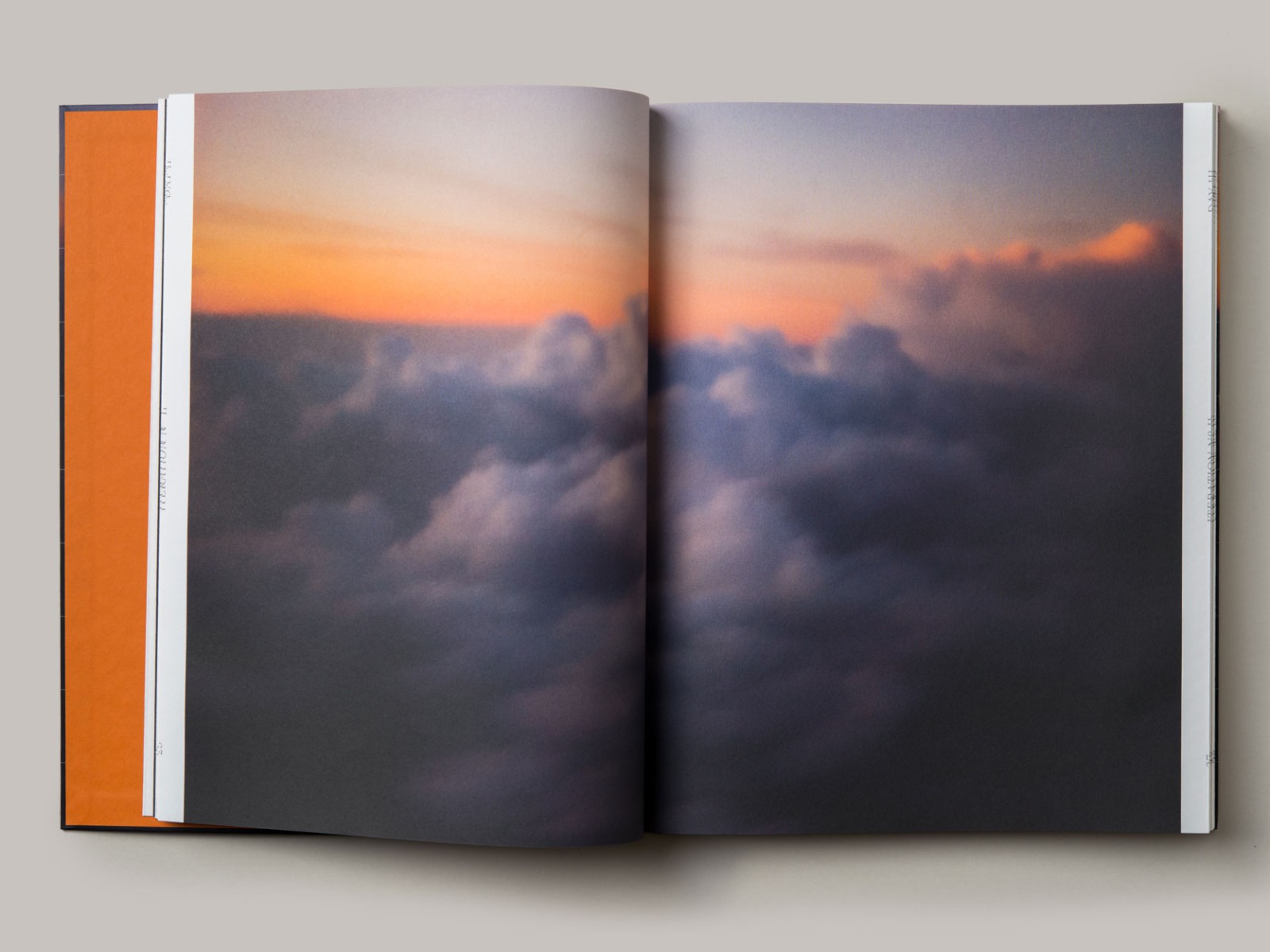
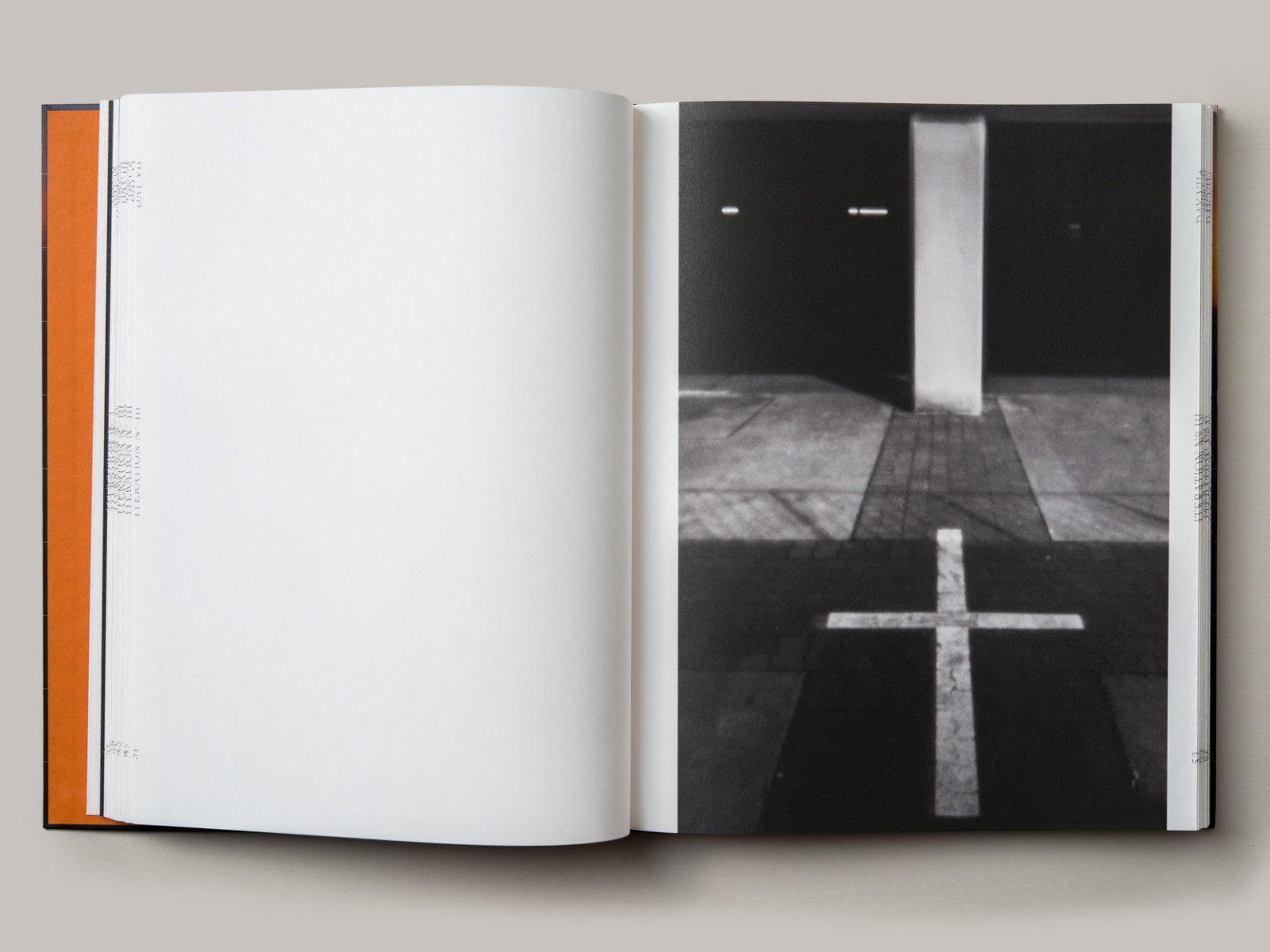
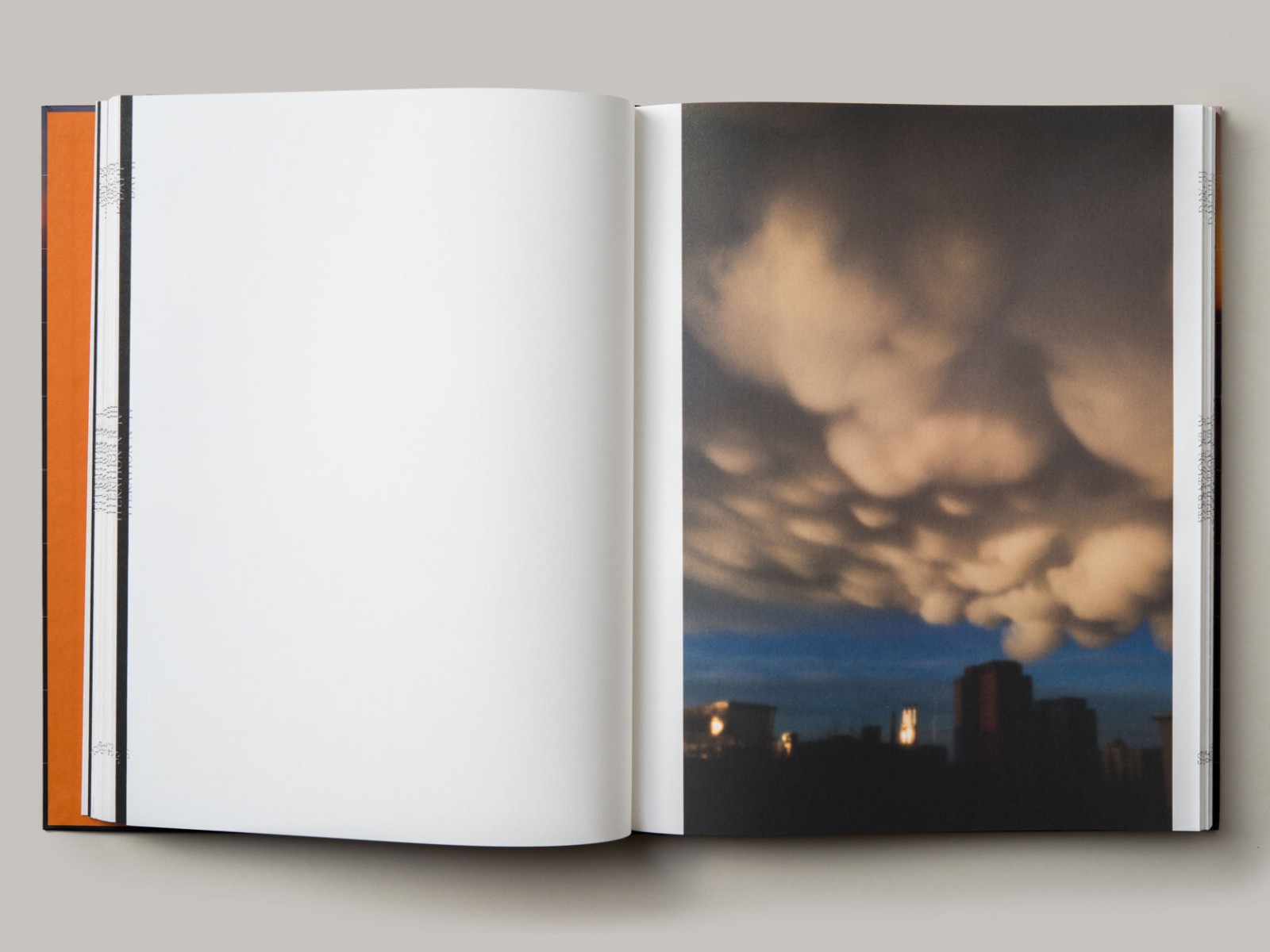
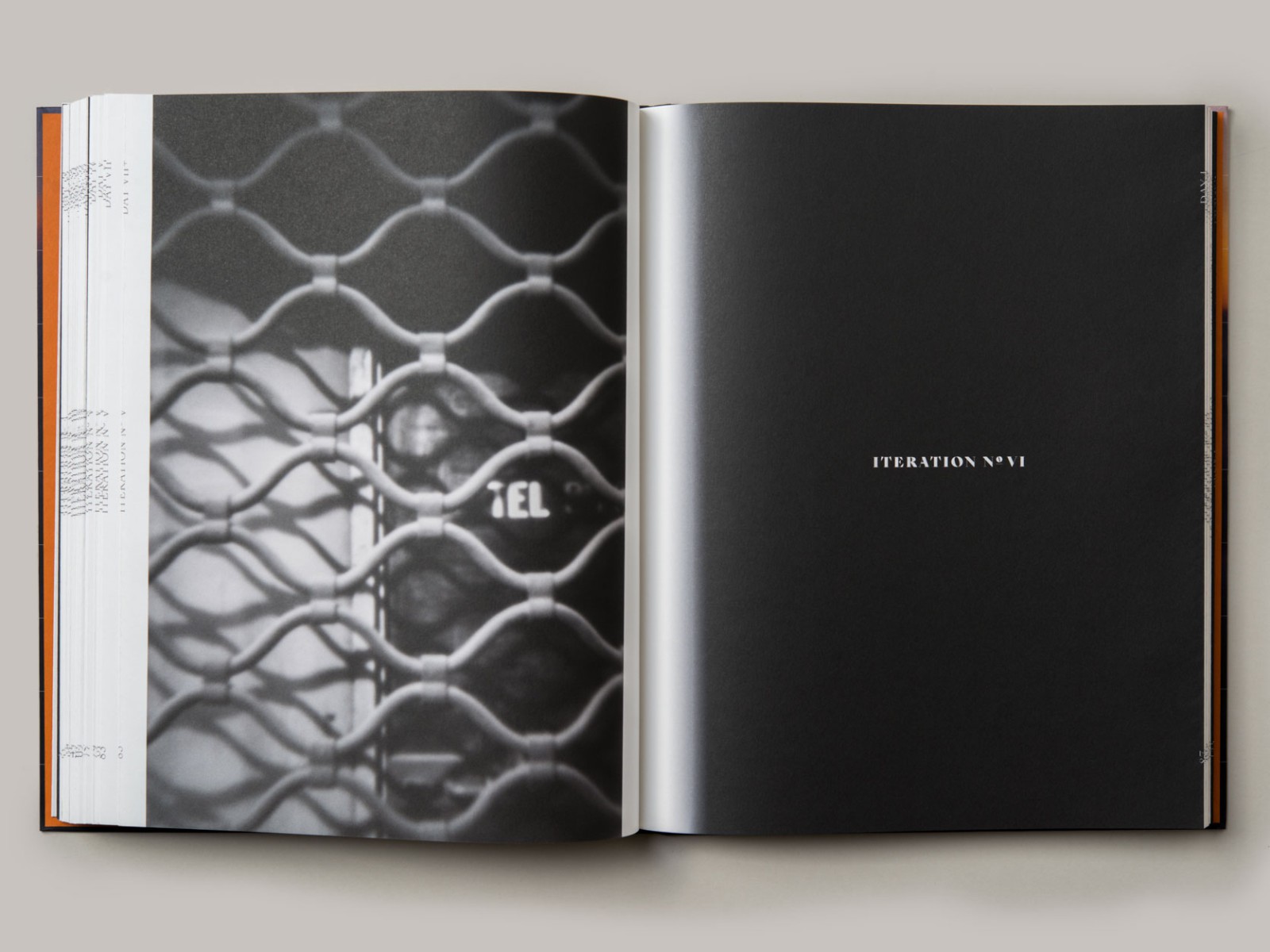
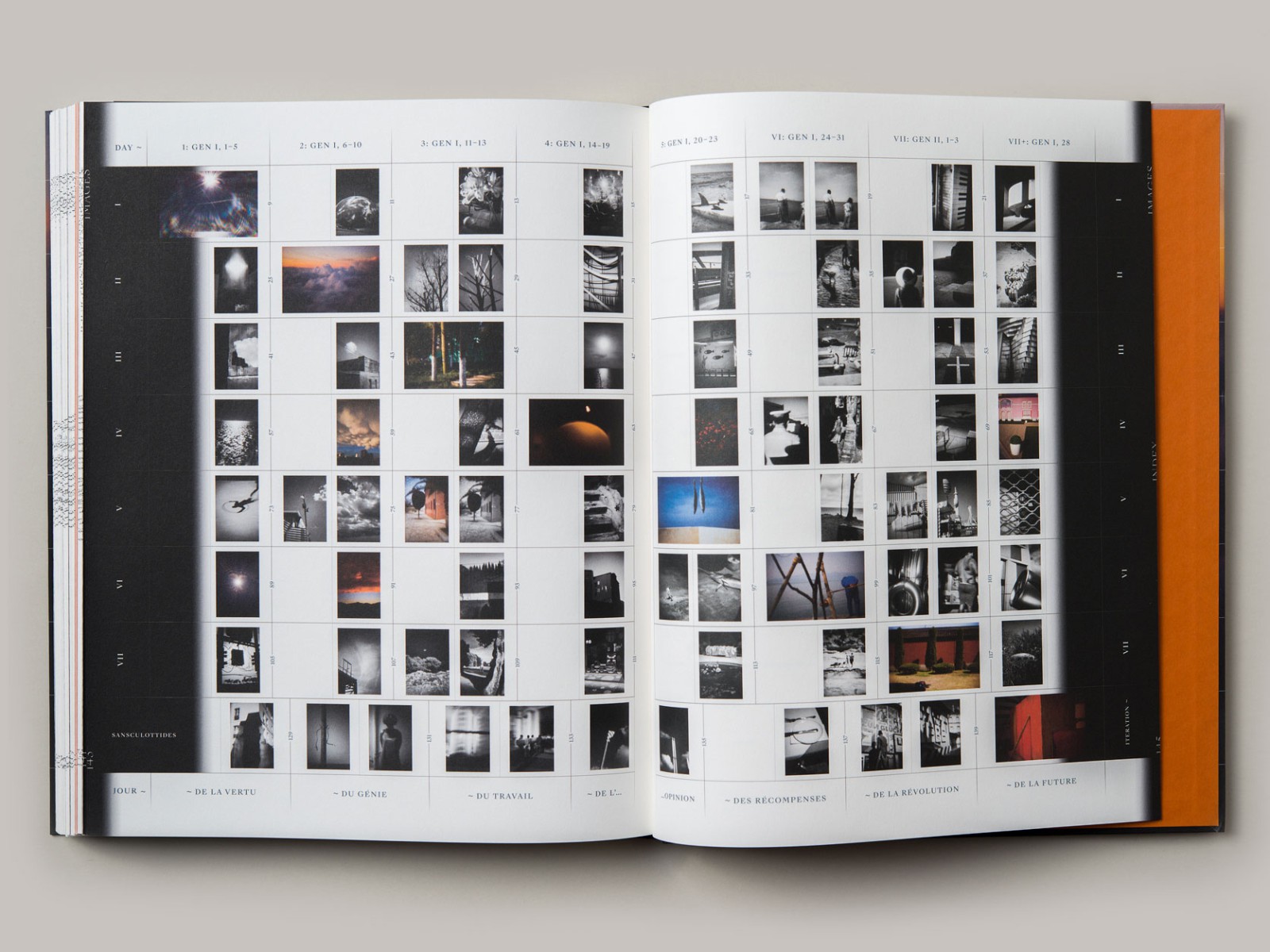
‹Eight Days a Week› reenacts creation, as described in the Book of Genesis, over and over again for seven weeks plus one, discovering that a new kind of creation, namely man-made creation, always creeps in on the final night. At the end, there is even an entire week that mankind itself creates and controls: the six transition days of the French Revolutionary calendar, which remained after the decimal straightening of the calendar at the end of the year.
Offset printing, Japanische glue binding, Hardcover
German, English
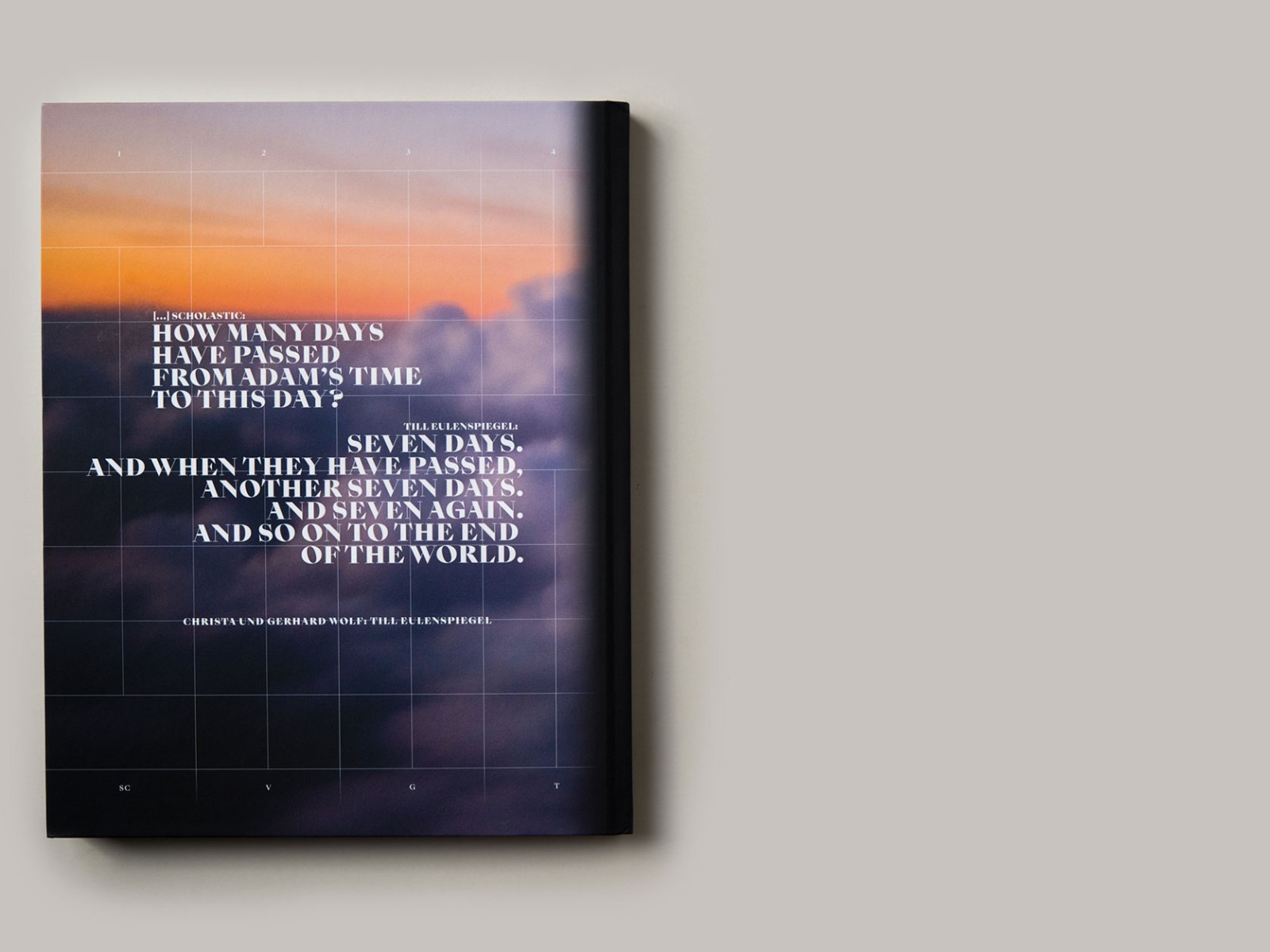
How old is the world?
«Seven days, and when they have passed, another seven days » is the convincing and correct answer that Till Eulenspiegel offered to this question in a film during a dispute among experts.
The course of history is not truly circular, but rather a double helix: it may be circular from day to day and from one year to the next, but in sum it is linear – from an ‹ irretrievable past › to an ‹ inevitable future ›, as Arthur Schopenhauer put it.
The first photo book of Moses
Photography creates worlds – or at least initially mountains of images. ‹ Eight Days A Week › attempts to create the world from those mountains by placing the motifs in a kind of sequence based on natural history. Seven attempts are made here – based on the assumption, that the divine creation might not have succeeded in the first attempt. To be more precise: they are seven plus one attempts. To be even more precise: in each of these eight attempts, the world is not created in seven days, but on one day more – because after the original creation is always finished on time for the Sabbath, the 7+ day is the dawn of the Anthropocene.
The pattern repeats on a large scale: after the first seven attempts that were reserved for God, the creation is concluded in an eighth week. It is the week of the «Sansculottides», the annual complimentary days of the French revolutionary calendar. Since this calendar did not have seven-day weeks, but rather ten-day decades of which three created a month, at the end of the year five days (in leap years six days) were left over that were given their own names as holidays: the celebration of virtue, talent, labor, convictions, honors and, every four years, of revolution.
Blur
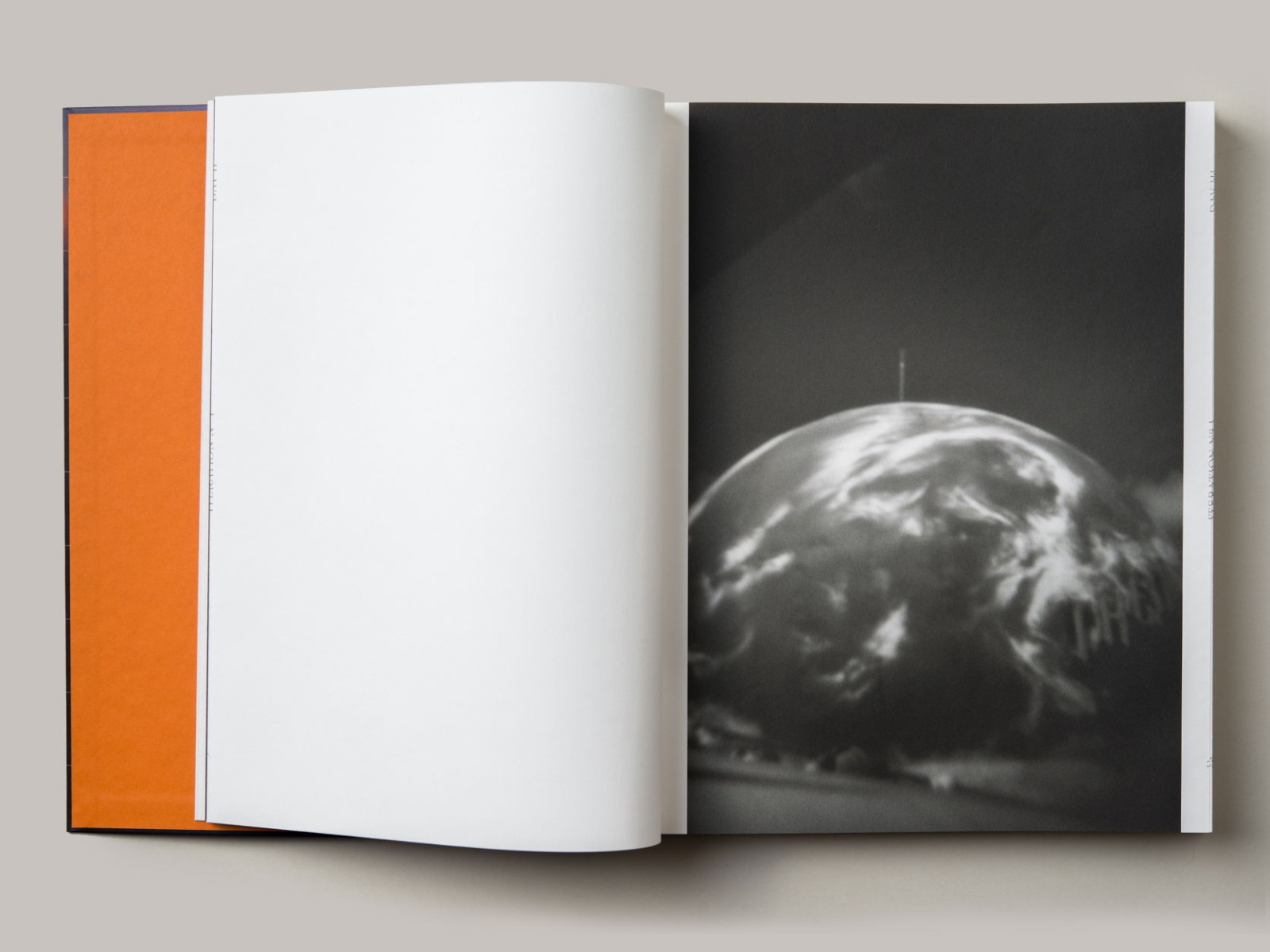
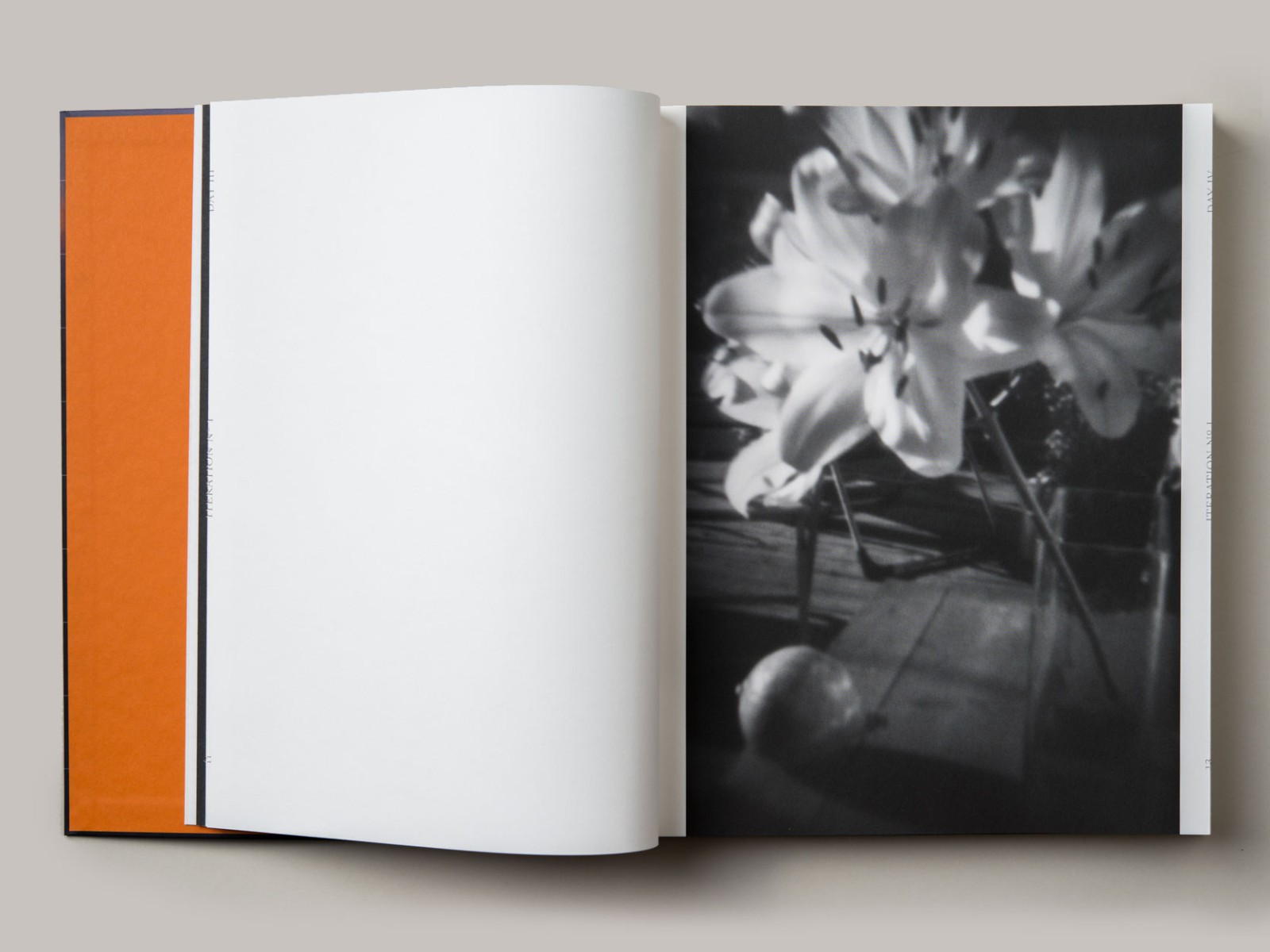
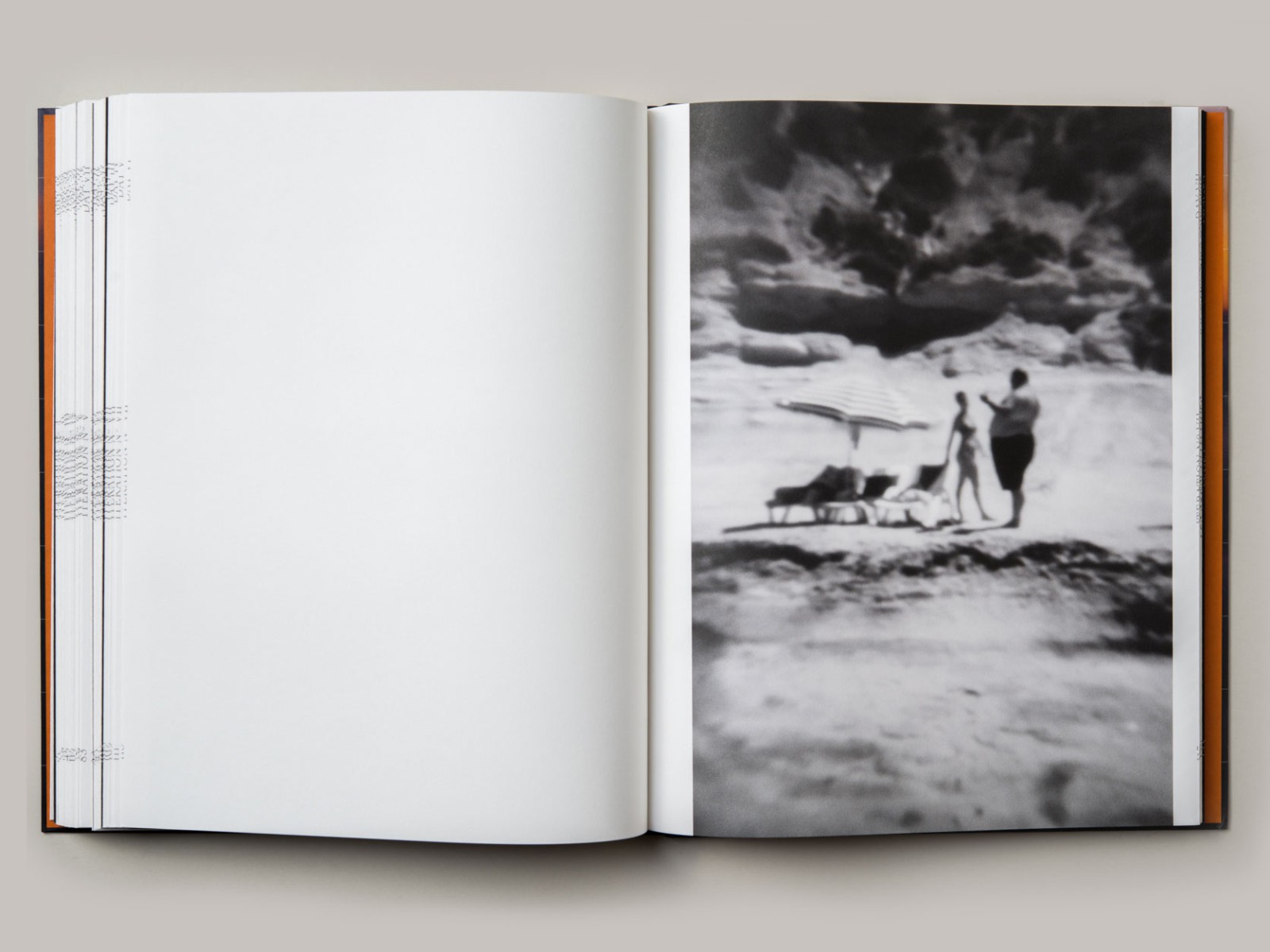
In photographic technology, there are objective criteria to evaluate images’ sharpness. According to these standards, the images in this book are all out of focus. ‹ Out of focus › is seen as a flaw for non-photographers, which is why we should use the term ‹ reduced detail ›. This sounds much more like an intent, which is, of course, present here.
This reduction in detail is created by abstaining from using a ‹ real ›, i. e. glass lens. Instead, I fall back on an element of original camera design. The first projection devices, used to help in drawing, didn’t have a lens, but rather just a very small hole.
The more important difference in relation to a glass lens is the relative lack of light that a pinhole ‹ lens › allows to pass. The camera is thus practically only usable in sunlight, and even then, you have to expect exposure times between a half second and two seconds. This has an effect on the selection of motifs. Forms should be as simple and large as possible, with as little movement as possible, since it leads to different ways subjects can be out of focus, depending on whether the camera or the motif is moving: camera shake or blurriness.
However, if you do everything right, then you get wonderful images of God’s creation; images that are precisely out of focus from three centimeters to infinity – from now to eternity.